Containers · 18 Jun 2026 · 13 min read
Container Gardening for Balconies, Patios and Very Small Spaces
Pot sizes, compost mixes, watering routines and the crops that genuinely thrive in containers when you have no ground to dig.
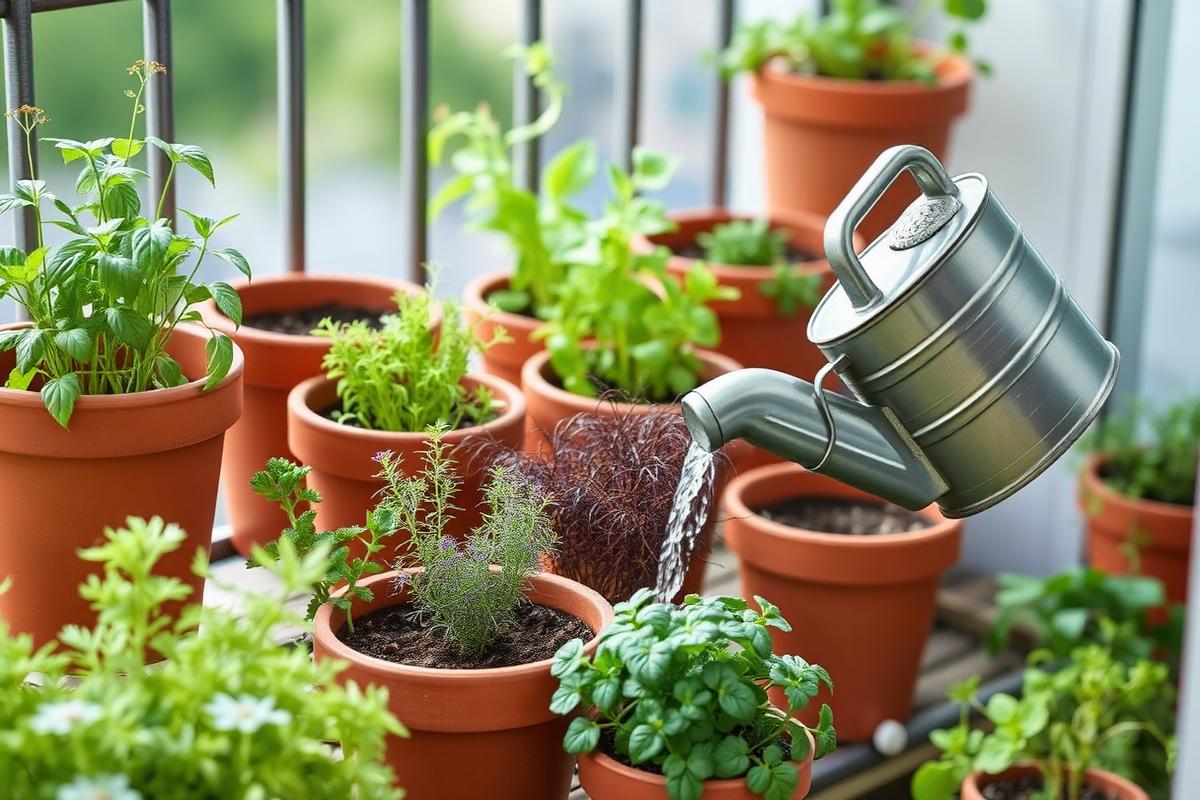
A container garden is not a compromised version of a real garden. It is a different discipline with its own rules, and once you learn them, a balcony three metres long can supply herbs all year, salad from March to November and enough tomatoes to make the neighbours curious.
Bigger pots forgive more mistakes
The single strongest predictor of success is pot volume. A small pot dries out in hours on a hot day, and a plant that wilts repeatedly never recovers its vigour. As a rough guide, herbs need at least five litres, salad and bush beans ten to fifteen, and tomatoes, peppers, courgettes and small fruit bushes twenty to forty litres. Grouping pots together shades their sides and slows evaporation, which is why a cluster always outperforms the same pots spread out.
Compost and drainage
Garden soil in a pot compacts into a brick. Use a peat-free multipurpose compost, and for anything permanent — shrubs, fruit, perennial herbs — mix in about a third loam-based compost for weight and structure. Every pot needs drainage holes. The old advice about a layer of crocks at the bottom is unnecessary and actually reduces the usable soil depth; a single piece of broken pot over the hole is enough to stop compost washing out.
Watering and feeding are non-negotiable
A container has no water table and no reserve. In midsummer, large pots in full sun may need water twice a day. Check by lifting a small pot or pushing a finger deep into a large one. Nutrients also wash out with each watering, so from six weeks after planting, feed weekly with a liquid feed, or mix a slow-release fertiliser into the compost at planting time. Self-watering containers with a reservoir are genuinely useful for anyone who travels.
- Best value crops in pots: salad leaves, herbs, chillies, cherry tomatoes, radish, spring onions, strawberries.
- Surprisingly good: dwarf French beans, chard, kale, bush courgette, potatoes in a sack.
- Difficult: sweetcorn, maincrop potatoes, pumpkins, anything needing deep root runs.
Weight, wind and winter
Balconies have load limits, and wet compost is heavy. Keep the heaviest pots near the wall and the structural edges. Wind is the other hidden factor: exposed balconies shred large leaves and dry plants faster than sun does, so a trellis or a screen of tough evergreens pays for itself. In winter, roots in pots are far more exposed to frost than roots in the ground; wrap vulnerable containers in fleece or hessian, and move them together against a sheltered wall.
Work with the constraints rather than against them and a small space becomes intensely productive — partly because everything is within arm's reach, and a garden you walk past ten times a day is a garden that gets looked after.