Wildlife · 27 May 2026 · 11 min read
Designing a Garden for Bees, Butterflies and Other Pollinators
Which plants genuinely feed pollinators, how to build a season-long flowering succession, and the small habits that make a garden safe for insects.
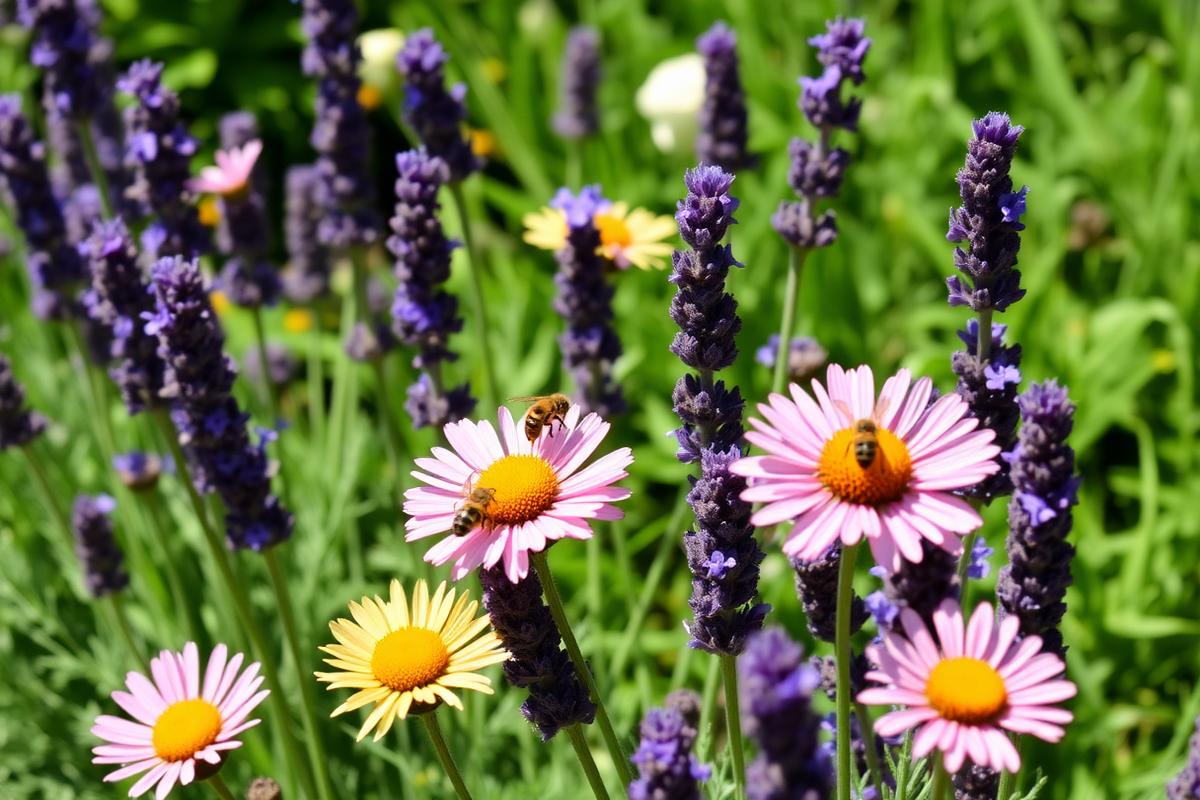
A garden planted with pollinators in mind is not a wilderness and does not have to look untidy. It is simply a garden that flowers for longer, includes more single-flowered varieties and tolerates a little mess in the right corners. The reward is immediate: more bees, more butterflies, more hoverflies eating aphids, and noticeably better fruit set on beans, courgettes and apples.
Single flowers over double flowers
Many showy bedding plants have been bred with extra layers of petals, which look impressive and are useless to insects — the nectaries are buried or bred out entirely. Open, single flowers where you can see the centre are the ones that feed. Think open daisies, single roses, hardy geraniums, borage, phacelia, lavender, catmint, marjoram, thyme and any of the umbellifers such as fennel and wild carrot.
Plan for a long season, not a peak
Most gardens flower heavily in June and go quiet by September, but pollinators need food from the first mild days of February to the last of October. Early nectar comes from crocus, hellebore, pulmonaria, willow catkins and flowering currant. The late-season shift is carried by sedum, aster, verbena bonariensis, ivy flowers and single dahlias. Filling those two gaps has more impact than adding another midsummer border.
- Late winter: crocus, snowdrop, hellebore, winter honeysuckle.
- Spring: pulmonaria, flowering currant, apple blossom, comfrey.
- Summer: lavender, catmint, borage, marjoram, echinacea, scabious.
- Autumn: sedum, aster, verbena bonariensis, single dahlia, ivy.
Habitat matters as much as food
Most bee species are solitary and nest in the ground or in hollow stems. Leave a patch of bare, undisturbed soil in a sunny place. Leave last year's hollow stems standing until late spring rather than cutting everything back in autumn. A shallow dish of water with pebbles gives insects somewhere to drink without drowning. A log pile in shade supports beetles and overwintering queens. None of this costs money; it mostly consists of doing slightly less tidying.
Skip the pesticides
Broad-spectrum insecticides do not distinguish between an aphid and the hoverfly larva eating it, and in a balanced garden the predators arrive within a week or two of the pests. Blast aphids off with water, squash them by hand, plant enough that a little damage is invisible, and accept that a garden with no insects at all would be a much worse garden than one with a few chewed leaves.
The change is quick. Plant a good succession this year and by next summer the difference in sound alone — that low hum over the lavender on a warm afternoon — will make the case better than any article can.